01
Recruit
6 healthy adults. Baseline metabolic-cart testing established each subject's daily caloric needs before the study began.

Independent, double-blind, 14-day overfeeding study. Same total calories. Different outcome.
Same calories. Different outcome. (p < 0.05)
Each subject completed both arms: regular peanut butter for 14 days, then WiO peanut butter for 14 days (or the reverse). A washout period reset baseline in between. Subjects, staff, and the laboratory were all blinded to assignment.
6 healthy adults. Baseline metabolic-cart testing established each subject's daily caloric needs before the study began.
One 12 oz jar (340 g) of regular peanut butter daily, on top of normal diet. All overfeed blinded to peanut butter assignment.
Normal diet, no peanut butter. Baseline reset before the second arm to eliminate carry‑over effects.
Same 12 oz jar (340 g) daily, same normal diet. Identical total caloric intake. Different fiber composition.
DXA scan for body composition. Resting metabolic rate via cart so any change shows. Respiratory exchange ratio measured. Dietary tracking three days per week.
Within-subject fat mass delta calculated. Each participant served as their own control, which strengthens statistical power despite the small sample size.
An n of 6 is small for an absolute claim. The crossover design partially compensates, because each subject served as their own control. The primary finding (the mass difference) was statistically significant (p < 0.05). The broader cyclodextrin mechanism has been validated in larger studies across multiple populations. See the full reference list.
Calorie intake was matched between groups with no significant differences in total intake, fat percentage, carb percentage, or protein percentage consumed. The only meaningful difference was in fat mass at the end of each 14‑day arm.
Regular peanut butter group gained significant fat mass (mean difference +1.00 kg, 95% CI 0.11 to 1.88 kg, p < 0.05). WiO group showed no significant fat-mass change. No significant differences in resting metabolic rate or respiratory exchange ratio between conditions. This rules out a metabolic‑rate explanation: the mechanism is fat binding, not calorie burning.

Backed by the WiO 1,000‑Year Guarantee.
Love the taste, or we make it right within 30 days. No questions. No hassle.
Same recipe, same fiber. Available now. Try it the way the study subjects did, as part of your normal routine.
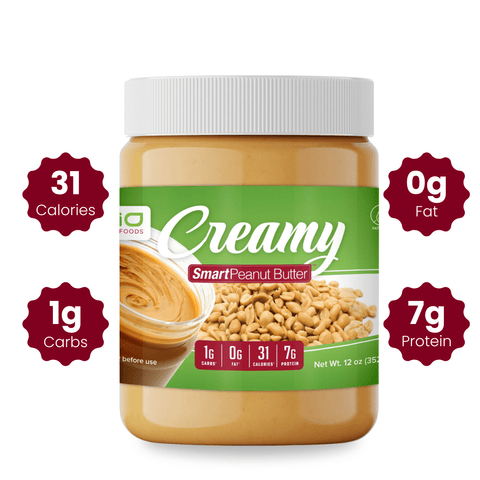
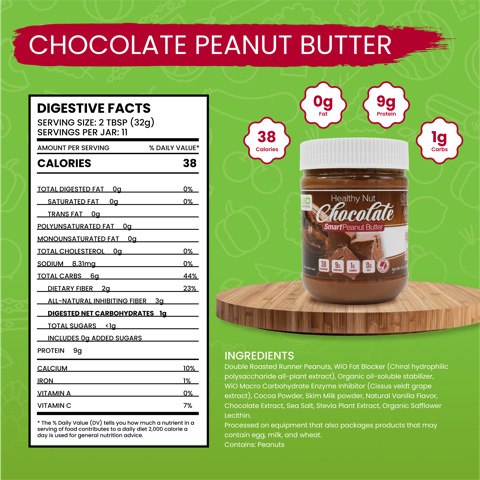
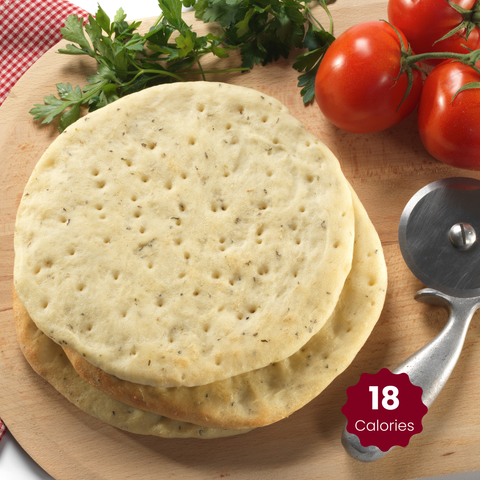
The study tested peanut butter because the experimental design needed a high-fat overfeeding condition. Peanut butter was the right vehicle. But the same modified cyclodextrin is in every WiO product: bread, pizza crust, cookies, croissants, tortilla chips. The fiber does the same work in each.
Read how the fiber worksApplied Science and Performance Institute. Effects of overfeeding regular versus modified peanut butter on body composition in healthy adults: a double-blind crossover trial. Tampa, FL.
Full journal citation pending publication. Study conducted at ASPI, Tampa, FL. Methods available in the protocol summary above.
Six peer-reviewed studies supporting the cyclodextrin mechanism. All publicly available through their respective journals or PubMed.
Start with one product or mix and match. Both options carry the same fiber.
Pick a product you already love and want to try. Subscribe and save 10% on every delivery. Save up to 28% on bigger orders.
Build a box from the full lineup. The subscription, one delivery, variety to carry over effects.
Subscribe & Save 10% compounds with the order-value ladder: $80+ saves 19%, $115+ saves 23%, $140+ saves 28% (subscriber 10% first, order tier on top). Auto-applied at checkout, no codes needed.